Quick Answer: WhatsApp automation for restaurants in Kuwait connects your menu, ordering flow, and customer follow-ups to a 24/7 AI agent via the WhatsApp Business API. Restaurants using this setup typically see 30–50% fewer missed orders and respond to every inquiry in under 3 seconds, even at 2 AM during peak delivery hours.
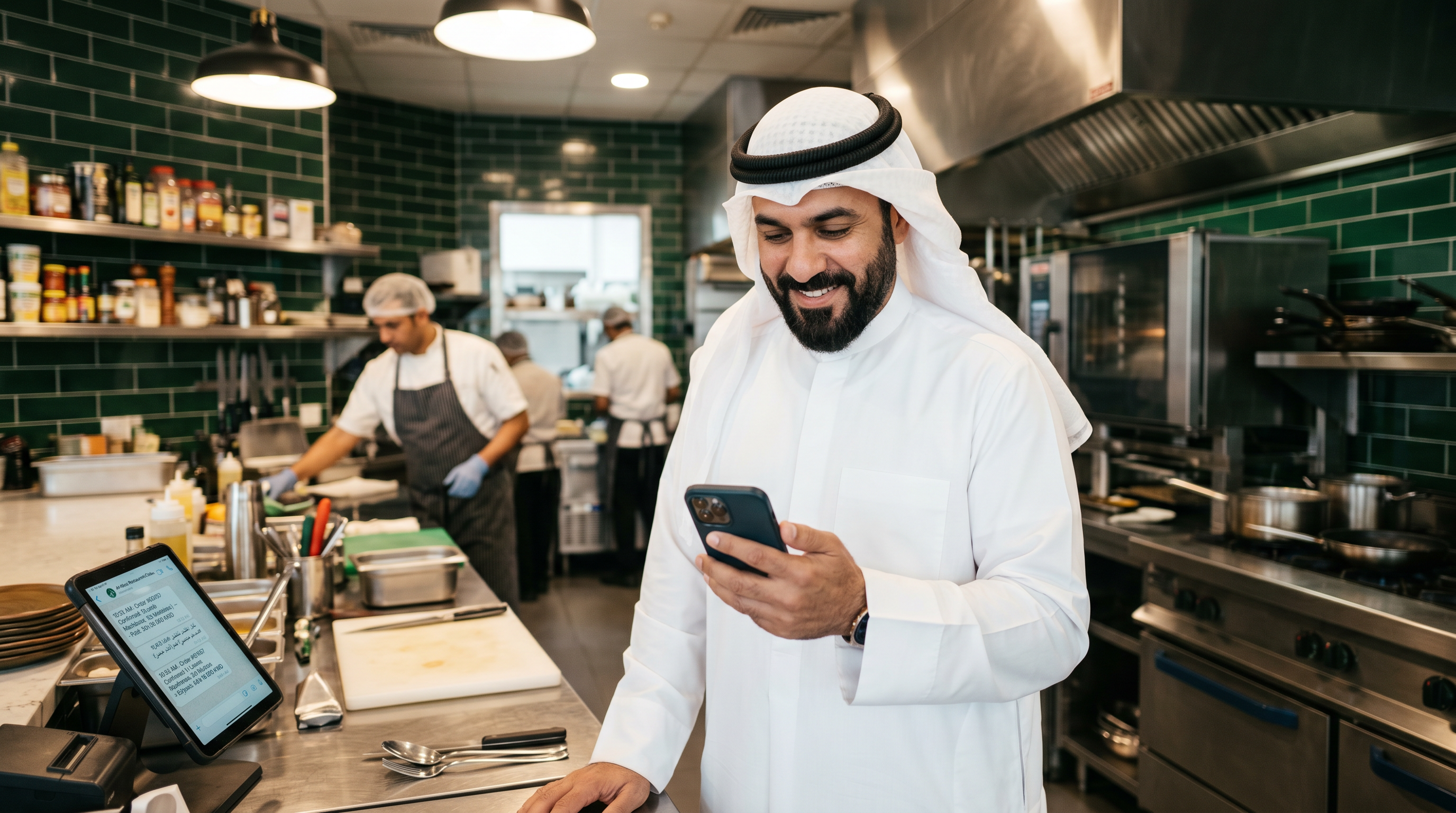
A Salmiya shawarma chain lost 140 confirmed orders in a single month. Not because the food was bad. Not because of pricing. Because no one replied to WhatsApp messages between 10 PM and 8 AM. Their competitor across the street, running WhatsApp automation through the API, captured those same customers and reported a 38% revenue increase in Q1 2024. The difference was not the kitchen — it was the reply speed.
This is not a hypothetical. After running 35+ WhatsApp AI deployments across Kuwait and the GCC, we at KIRA see this pattern every month. Restaurants hemorrhage revenue through unanswered WhatsApp messages while their team sleeps, eats, or handles in-person orders. The fix exists. Most Kuwait F&B owners just do not know how to implement it correctly.
Why Most Kuwait Restaurants Get WhatsApp Automation Wrong
The mistakes are predictable. We see the same three errors repeated across Hawalli, Fahaheel, and Mahboula restaurants regardless of cuisine or ticket size.
Mistake 1: Using the WhatsApp Business App instead of the API. The standard WhatsApp Business App caps you at one device, one agent, and zero automation logic. You cannot build auto-replies that handle pricing objections, confirm orders, or escalate complaints to a manager. The fix: migrate to the WhatsApp Business API, which is what Meta-verified solution providers like KIRA deploy for Kuwait F&B brands.
Mistake 2: Building a keyword-triggered chatbot instead of a real AI agent. Keyword bots fail the moment a customer types in Gulf Arabic slang, mixes languages, or asks something slightly off-script. A customer typing "wain menu 7agkom" (where is your menu) does not trigger a keyword match for "menu". The fix: deploy an AI agent trained on Gulf Arabic and English mixed conversation, like Lojain AI, which understands context, not just keywords.
Mistake 3: Automating only the first message, then dropping the conversation. Most restaurant owners set a welcome message and call it automation. That handles 10% of the actual workflow. Reservations, order confirmations, complaints, upsells, and re-engagement messages all remain manual. The fix: map every conversation type your restaurant receives — then automate each path end to end.
Step-by-Step: How to Set Up WhatsApp Automation for Your Kuwait Restaurant
This process takes 5–10 working days from start to live deployment when you work with a Meta-verified provider. Here is exactly what happens at each stage.
- Audit your current WhatsApp volume and conversation types. Before touching any technology, pull your last 30 days of WhatsApp conversations and categorize them. Count how many are order inquiries, reservation requests, complaints, pricing questions, and delivery follow-ups. This audit tells you where automation delivers the highest ROI. For most Kuwait casual dining restaurants, order inquiries and delivery ETAs account for 65–70% of all incoming messages. That is your first automation target.
- Apply for WhatsApp Business API access through a Meta-verified Solution Provider. You cannot access the API directly through Meta as an individual restaurant. You apply through a recognized provider. KIRA is a Meta-verified Solution Provider operating in Kuwait and the GCC. The application requires your business trade license, a verified Facebook Business Manager account, and a dedicated phone number not previously registered on WhatsApp. Approval typically takes 3–5 business days in Kuwait. Do not use a number already linked to your personal or standard business WhatsApp — you will lose that chat history.
- Map your conversation flows before writing a single message. Draw every path a customer can take from first message to completed order or resolved complaint. A Mishref burger restaurant we onboarded had 11 distinct conversation paths. Common ones: (1) customer asks for menu → sees options → orders → pays via Tap Payments link → receives confirmation; (2) customer asks about allergens → gets specific answer → converts or opts out; (3) customer complains about late delivery → AI acknowledges, flags to human manager, offers discount code. Map these before any build starts.
- Build and train your AI agent on your specific menu, policies, and Gulf Arabic tone. This is where most DIY setups fail. Your AI agent needs to know your actual menu items, prices, delivery zones, operating hours, and how your brand speaks. A high-end Arabesque restaurant in Kuwait City speaks differently from a grab-and-go poke spot in Salmiya. Lojain AI handles both — trained on your specific content, not a generic template. The agent must handle pricing objections ("why is delivery KD 1.5?"), complaints ("my order was wrong"), and follow-ups ("has my order left yet?") without human intervention.
- Integrate payment and ordering systems before going live. An automation flow that collects an order but cannot confirm payment is broken. In Kuwait, Tap Payments integration allows your WhatsApp AI agent to send a payment link mid-conversation. The customer pays within WhatsApp, your POS or kitchen display receives the order, and the AI sends a confirmation with estimated time. This loop — inquiry to payment to confirmation — can complete in under 4 minutes with zero human involvement. Check KIRA's restaurant automation setup for how this integration works in practice.
- Set escalation triggers for human handoff. Not every conversation should stay with the AI. Define clear escalation rules: any complaint mentioning food safety goes to a manager immediately; any order above KD 50 gets a human confirmation call; any customer who says "I want to speak to someone" triggers instant handoff. Without escalation rules, your automation will frustrate exactly the customers you most need to retain. Build the handoff logic before launch, not after the first complaint.
- Launch, measure, and optimize in 30-day cycles. After going live, track four numbers weekly: response rate (target: 100%), resolution rate without human handoff (target: 70%+), order conversion rate from WhatsApp conversations, and customer re-order rate within 30 days. A Fahaheel seafood restaurant we deployed for hit 74% resolution without human handoff by week three and saw repeat orders from WhatsApp customers climb 22% by day 45. Optimization is ongoing — review conversation logs weekly for the first month to catch gaps.
Two Kuwait Restaurants That Did This: Real Numbers
A Salmiya cloud kitchen running five virtual brands was handling 300+ WhatsApp messages daily with two staff members. Average response time: 22 minutes. Missed messages per day: roughly 40. After deploying WhatsApp automation via the API with Lojain AI as the front-line agent, response time dropped to under 3 seconds. The kitchen reported a 41% increase in confirmed orders within 60 days and cut WhatsApp staffing from two people to half a person (one staff member reviewing escalations only).
A Hawalli family restaurant with a strong lunch delivery trade had a specific problem: customers messaging after 10 PM for next-day pre-orders were never replied to until morning, by which time they had ordered elsewhere. The automation solution was simple — an AI agent that accepted next-day pre-orders 24/7, confirmed via WhatsApp, and sent a reminder message at 11 AM the next day. Pre-order volume grew from near zero to 35 confirmed pre-orders per week within the first month. Revenue from that segment alone covered the cost of the entire automation deployment within six weeks. You can review more deployments like this at KIRA's case studies.
What to Do This Week
You do not need to build everything at once. Three actions this week move you from zero to momentum.
Action 1: Count your unanswered WhatsApp messages from the past 7 days. Open your WhatsApp Business app and scroll back through last week. Count every message that received no reply, or a reply after 2+ hours. Multiply that number by your average order value. That is your weekly revenue leak. For most mid-size Kuwait restaurants, this number sits between KD 200 and KD 800 per week.
Action 2: Verify your Facebook Business Manager is set up and verified. API access requires a verified Business Manager account. If yours is unverified, start the verification process now — it can take 3–7 days and is completely separate from building your automation. Go to business.facebook.com, navigate to Business Settings, and check your verification status. Do not wait until you are ready to build to discover this step is incomplete.
Action 3: Book a 20-minute audit call with KIRA this week. Bring your current WhatsApp message volume and your top 5 most common customer questions. In 20 minutes, we will map which conversation types to automate first and give you a realistic timeline for your specific restaurant setup. If you are an SMB restaurant owner, ask about the Lojain Lite Bundle — designed specifically for Kuwait's independent F&B operators.
Common Questions About WhatsApp Automation for Kuwait Restaurants
Does WhatsApp automation work in Arabic for Kuwait restaurant customers?
Yes, but only if you deploy an AI agent trained on Gulf Arabic specifically — not standard Modern Standard Arabic. Kuwait customers mix Arabic and English in the same message ("wain el menu" or "do you have free delivery today بس"). Lojain AI handles Gulf Arabic, English, and mixed-language conversations natively. A keyword-based chatbot will fail on these inputs.
What is the difference between WhatsApp Business App and WhatsApp Business API for restaurants?
The WhatsApp Business App is a free mobile app for small businesses — one device, manual replies, very limited automation. The WhatsApp Business API is a developer-level integration that allows unlimited agents, AI automation, CRM integration, and bulk messaging via approved templates. Kuwait restaurants that want to automate order-taking, confirmations, and follow-ups need the API, not the app.
How long does it take to set up WhatsApp automation for a Kuwait restaurant?
Realistically, 5–10 working days from application to live deployment when working with a Meta-verified provider. The timeline depends on how quickly your Facebook Business Manager gets verified (3–5 days) and how complex your conversation flows are. A single-brand restaurant with a clear menu and standard ordering process typically goes live faster than a multi-brand cloud kitchen.
Can WhatsApp automation handle food complaints and refund requests?
Yes — with the right setup. Lojain AI handles complaints, issues apology responses, and can offer discount codes or refunds based on rules you define. For complaints that exceed a defined severity threshold (wrong order, food safety, high-value customer), the system escalates immediately to a human manager with full conversation context. The AI does not replace human judgment on serious issues — it filters and routes so your team focuses on what matters.
What happens to WhatsApp API pricing after April 2024 changes for Kuwait businesses?
Meta restructured WhatsApp API conversation pricing into four categories effective April 1, 2024: utility, authentication, marketing, and service conversations — each billed at different rates. For Kuwait restaurants, the most common conversation types are utility (order confirmations, delivery updates) and service (customer-initiated inquiries). Service conversations initiated by the customer are currently free within a 24-hour window. Marketing messages sent outside that window carry a cost. Working with a Meta-verified provider ensures your conversation templates are categorized correctly to avoid unnecessary charges. See KIRA's pricing page for current Kuwait API cost guidance.
Can a small independent Kuwait restaurant afford WhatsApp automation?
Yes. KIRA built the Lojain Lite Bundle specifically for independent Kuwait F&B operators who do not need enterprise-scale infrastructure. The bundle covers API access, AI agent setup, Gulf Arabic training, and basic flow automation. The Hawalli family restaurant case above recovered the cost within six weeks from pre-order revenue alone. The question is not whether you can afford it — it is how much revenue you are losing each week without it.
Which WhatsApp API provider is best for restaurants in Kuwait?
The right provider for a Kuwait restaurant understands Gulf Arabic, integrates with local payment solutions like Tap Payments, and has direct F&B deployment experience in Kuwait specifically — not just a global template. KIRA is a Meta-verified Solution Provider with 35+ GCC deployments. For a direct comparison of what separates providers in this market, see KIRA's comparison of Wati vs Lojain.
Every week without automation is a week your competitor captures your late-night customers. The setup is not complicated. The decision is.
Talk to Us on WhatsAppReady to Scale Your Marketing with AI?
KIRA delivers AI-powered marketing systems, WhatsApp automation, and media buying strategies for businesses worldwide.
Book a Strategy Call More ArticlesGet KIRA in your AI answers
Add KIRA as a Google Preferred Source so our articles show a "Preferred" badge in your AI Overviews & AI Mode results. Log in to Google, then tick the box next to kiraco.org.
Add KIRA as a Preferred Source