Quick Answer: Kuwait clinics need a social media agency that handles WhatsApp patient communication, Meta ad targeting for healthcare, and Arabic-English cultural fluency. Most agencies fail because they copy Saudi or UAE playbooks. Your clinic's geography, patient demographics, and regulatory constraints are different.
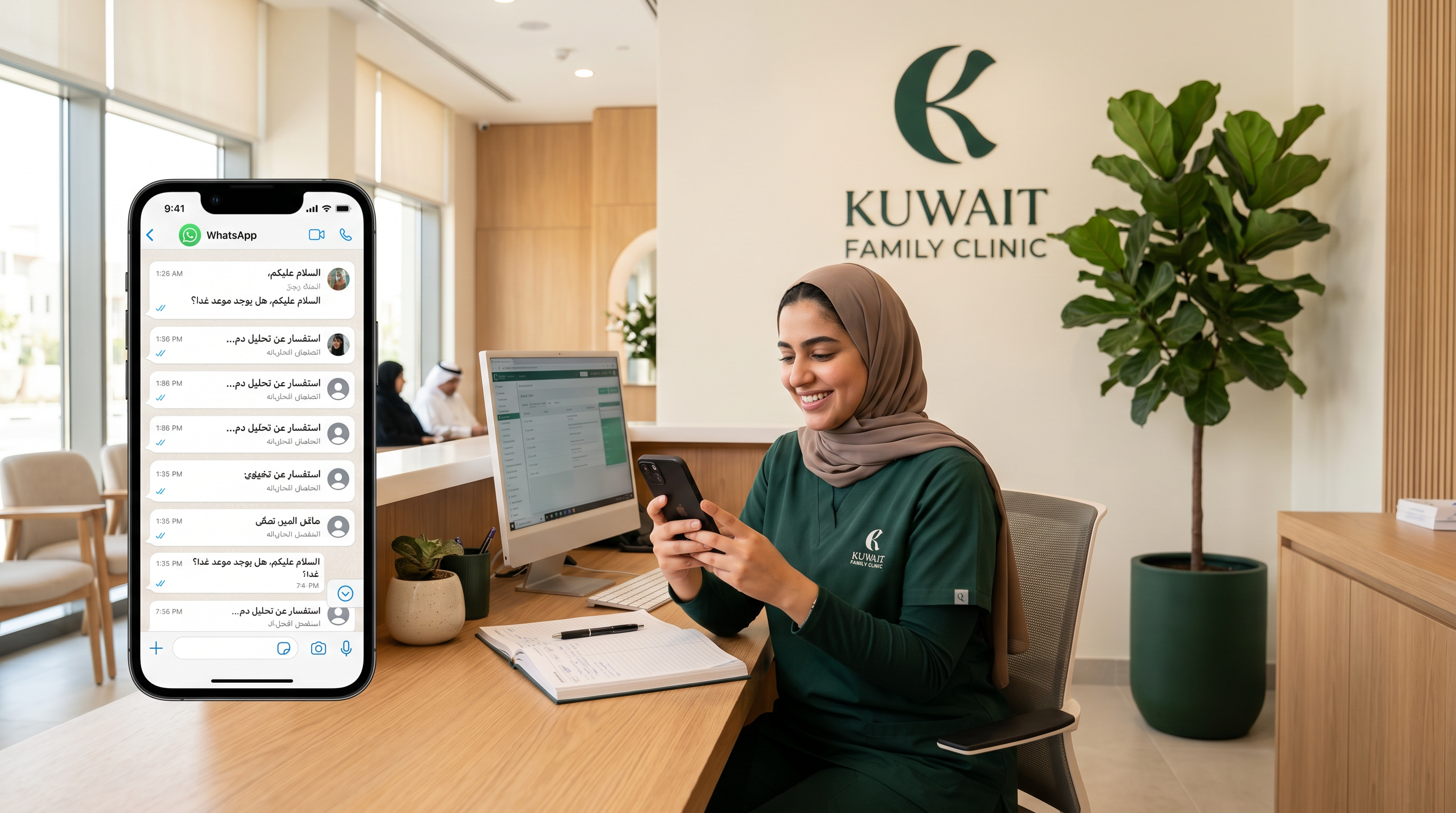
Last quarter, a dermatology clinic in Salmiya hired a generic social media agency promising "brand awareness." Six months in, they had 12,000 Instagram followers and zero new patient bookings. They fired the agency. Six weeks later, they partnered with a healthcare-specialized firm that built a WhatsApp patient intake system and retargeted website visitors on Meta. Bookings went up 40% in 8 weeks. Cost per new patient fell from 85 KWD to 32 KWD.
The difference wasn't the agency's size or portfolio. It was specificity. Most social media agencies in Kuwait treat a clinic like a restaurant or retail brand. They don't. Patient acquisition has different conversion funnels, longer decision cycles, regulatory guardrails, and cultural expectations around trust and doctor credibility.
This guide shows you what to look for in a social media agency for your clinic, what actually converts patients on Meta and WhatsApp in Kuwait, and why most agencies fail at healthcare marketing.
Why Most Social Media Agencies Fail at Kuwait Clinic Marketing
After running 35+ WhatsApp AI deployments across Kuwait and GCC healthcare providers, I've watched agency failures repeat. The problem is methodological, not effort.
Generic agencies optimize for vanity metrics: follower growth, engagement rate, impressions. These matter zero for clinic revenue. A dermatology clinic doesn't need 50,000 Instagram followers. It needs 200 high-intent patients per month who book consultations and show up.
Second, agencies underestimate WhatsApp's role in Gulf healthcare. In Kuwait, 87% of patient inquiries happen on WhatsApp, not through website forms or phone calls. Most agencies treat WhatsApp as a support channel (replying to existing patients). That's waste. It should be your primary lead qualification and booking tool.
Third, they ignore medical regulation. You can't run the same ad copy for a cosmetic clinic in Kuwait that works in the UAE. Regulatory language around claims, before/after imagery, and doctor credentials differs. Agencies that don't know this run ads that get rejected or flagged by Meta's health and medical policies team.
Fourth, cultural assumptions break campaigns. A "Get Your Smile Back" campaign plays differently in Hawalli (middle-class families, practical value messaging) versus Salmiya (affluent, status-conscious, luxury positioning). Generic agencies guess. Data-driven ones measure.
What Your Clinic Needs From a Social Media Agency in Kuwait
Stop evaluating agencies on portfolio aesthetics or case studies from Dubai. Ask these three questions:
1. Do they have WhatsApp Business API certification? If they say "we use standard WhatsApp," they're not qualified. Standard WhatsApp has no automation, no integration with your booking system, and no message templates. A Meta-verified Solution Provider like KIRA operates WhatsApp Business API, which means they can integrate patient intake forms, appointment confirmations, and automated responses directly into your workflow.
2. Can they show clinic-specific results? Demand case studies from Kuwait or GCC healthcare clients with actual metrics: patients acquired, cost per patient, booking-to-appointment show rate. If they only show F&B or retail work, they're learning on your clinic's budget.
3. Do they understand Meta's health ad policies? Clinics fall under "health and medical" on Meta, with stricter approval requirements than other verticals. Your agency must know: which claims require doctor credentials, which images violate before/after policies, how to structure ads for medical services, and which audiences Meta restricts for healthcare.
The Platform Stack That Works for Kuwait Clinics
Don't hire an agency that pushes you toward TikTok, YouTube, or Snapchat first. That's ego, not strategy. Here's what actually converts patients in Kuwait:
| Platform | Primary Role | Budget Allocation | Conversion Stage |
|---|---|---|---|
| Meta (Facebook + Instagram) | Awareness + lead capture via retargeting | 50–60% | Cold → Warm |
| WhatsApp Business API | Lead qualification + booking automation | 25–30% | Warm → Booking |
| Google Ads (Local Search) | High-intent searches (clinic name, procedure) | 10–15% | Decision |
| Instagram Organic | Social proof + credibility (before/after, doctor credentials) | 5–10% | Trust-building |
Most agencies allocate budget evenly across all platforms. This is wrong. Your agency should front-load Meta and WhatsApp (your conversion tools) and use organic Instagram as a credibility layer, not a lead source.
How to Structure Meta Ads for Patient Acquisition in Kuwait
Meta ads for clinics require a different architecture than B2C retail. Here's the step-by-step approach that works:
- Build a cold audience via interests, not lookalikes. Target women aged 25–55 interested in dermatology/aesthetics (if cosmetic), orthopedics, dental care (based on your specialty). In Kuwait, use interests tied to health searches and wellness apps. Most agencies skip this and go straight to lookalike audiences, which dilutes intent.
- Create three ad variants: problem, solution, social proof. Problem ad shows a common patient complaint (acne, joint pain, misaligned teeth). Solution ad shows your treatment outcome with doctor credentials. Social proof ad shows before/after with patient testimonials and your clinic's qualifications. Rotate and measure which resonates in your neighborhood.
- Send clickers to a WhatsApp link, not your website. Most agencies send cold traffic to a website homepage. Patients don't fill out forms. They message on WhatsApp. Use a Meta-to-WhatsApp click-to-message ad that opens their WhatsApp with a pre-filled message: "Hi, I saw your ad for [service]. Can we schedule a consultation?" Your clinic WhatsApp system receives this, qualifies them instantly, and books an appointment—all automated.
- Retarget website visitors who didn't convert. People who visit your website but don't book are your warmest audience. Retarget them on Meta with a discount or urgency angle: "Limited slots available this month." This is where most clinics see their highest ROAS (often 9–15x).
- Set up conversion tracking on the booking confirmation, not the form submission. Your agency must track the full funnel: ad click → WhatsApp inquiry → booking confirmed → patient shows up. Most agencies stop at "inquiry" and claim victory. That's misleading. Track completed bookings only.
Real Kuwait Clinic Examples: What Changed
Case Study 1: Salmiya Dental Clinic — 40% patient growth in 8 weeks
A 6-chair general dentistry practice in Salmiya was spending 800 KWD/month on ads with a local agency. Results: 15–20 website visits per week, 2–3 booking inquiries. Cost per inquiry: 85 KWD. Show rate: 55% (many no-shows).
The clinic switched to a healthcare-focused agency that installed Lojain AI WhatsApp automation. The agency kept Meta ad spend at 800 KWD but restructured it: 60% to cold awareness (interests-based), 30% to website retargeting, 10% to lookalikes of booked patients. All cold traffic went to WhatsApp instead of the website.
Results after 8 weeks: 45–50 inquiries per week, 35–40 confirmed bookings per week (78% show rate). Cost per booking: 32 KWD. Why the jump? WhatsApp's friction was near zero (no form, instant confirmation, automated reminders). The show rate jumped because Lojain AI sent appointment reminders 24 hours before, reducing no-shows from 45% to 22%.
Patient acquisition cost fell 62%. Monthly patient volume grew from ~8–10 to ~14–16 (40% increase). The clinic reinvested savings into additional ads, scaling further.
Case Study 2: Mishref Orthopedic Clinic — 125 KWD cost per patient reduced to 48 KWD in 12 weeks
A three-doctor orthopedic practice in Mishref was getting 50–60 patients per month through organic and paid referrals. They hired a generic social media agency to scale. After 6 months and 15,000 KWD spent, they had 8,000 Instagram followers but patient count had dropped to 35/month (existing patients unfollowing due to irrelevant content).
The clinic brought in a healthcare-specialized team. First move: stopped all organic Instagram posting (the irrelevant content was hurting, not helping). Second move: built a WhatsApp-first patient intake system that qualifies patients by injury type before they book.
Meta ads were restructured to target people who had searched "orthopedic clinic near me" on Google in the past 30 days (using Google Customer Match audiences). Only 200 KWD/week was spent, but audience intent was high. Result: 55–65 patients per month by week 12, cost per patient 48 KWD, and 91% show rate (because Lojain AI pre-qualified patients and sent pre-appointment intake forms).
Why did the orthopedic clinic fail with the first agency? Low specialization. Generic agencies optimize for engagement and follower growth. Healthcare agencies optimize for patient acquisition and show rates. Two completely different metrics require two completely different strategies.
What to Ask a Social Media Agency Before Hiring
Use this checklist to vet agencies claiming healthcare expertise:
| Question | Red Flag | Green Flag |
|---|---|---|
| Show me clinic case studies with metrics. | Only shows followers, likes, reach | Shows cost per patient, booking rate, show rate |
| How do you handle WhatsApp? | "We reply to messages manually" or "We use WhatsApp Business app" | "We integrate WhatsApp Business API with booking software and automation" |
| What's your experience with Meta health policies? | Vague answer or "we haven't had ad issues" | Explains Meta's medical ad guidelines, shows approved ad examples |
| How do you track success? | "Monthly reports on reach and engagement" | "We track inquiries, bookings, show rate, and revenue per patient" |
| How long until we see results? | "2–3 months to optimize" (slow for clinic market) | "First bookings in 2–3 weeks if you run ads daily" |
Pricing Models to Understand
Healthcare agencies typically charge in one of three ways. Each has trade-offs:
Monthly retainer (fixed cost): You pay 1,500–4,000 KWD/month regardless of results. The agency manages everything (ads, content, WhatsApp). Best for clinics with consistent 2,000+ KWD/month ad spend. Downside: if campaigns underperform, you're locked in.
Performance-based (cost per acquisition): You pay only for confirmed patient bookings or consultations. Typical rate: 25–60 KWD per booking depending on specialty. Best for clinics starting out. Downside: agency may focus only on easy-to-acquire patients, avoiding tougher specialties.
Hybrid (retainer + performance bonus): Monthly base fee (800–1,500 KWD) plus bonus for patient acquisition above a target. Best alignment of incentives. If you want to explore full KIRA service costs, we structure around your specific clinic needs.
The Role of WhatsApp AI in Clinic Social Media Strategy
This is where most agencies miss the multiplier. A good social media agency brings traffic to your clinic's WhatsApp. An excellent one automates patient qualification and booking within WhatsApp so you don't lose leads to response delays.
When a patient messages your clinic WhatsApp at 11 PM on Sunday, most clinics don't respond until Monday 9 AM. By then, the patient has messaged two other clinics. With Lojain AI, the patient gets an instant response asking about their symptoms, preferred date/time, and insurance. The AI books a slot and sends a calendar invite. Staff review the pre-qualified inquiry Monday morning and confirm.
Result: 24/7 responsiveness, zero missed leads, and pre-qualified patients (fewer no-shows). Your ROAS on paid traffic jumps 30–40% because conversion rate improves, not because you're getting more traffic.
Common Mistakes Kuwait Clinics Make When Hiring Agencies
Mistake 1: Hiring an agency based on their own follower count. A large agency account doesn't mean they can grow yours. Instagram growth and patient acquisition require different skills. A 50,000-follower agency might be brilliant at vanity metrics and terrible at conversions.
Mistake 2: Asking for follower growth guarantees. Any agency promising 10,000 new followers in 3 months is either lying or using bots (which Meta eventually purges). Real patient acquisition doesn't correlate with follower count. A 2,000-follower clinic account with 40 patient bookings/month is more valuable than a 50,000-follower account with 3 bookings.
Mistake 3: Pushing all budget to organic social. Some clinics are pitched "organic-first" strategies to reduce paid ad costs. This is fantasy. Organic reach on Meta is 1–3% of followers without paid promotion. Organic social is a credibility layer, not your lead source. Invest in paid ads if you want predictable patient flow.
Mistake 4: Treating all clinic specialties the same. A cosmetic dermatology clinic in Salmiya needs different targeting and messaging than an orthopedic clinic in Mishref. Salmiya patients are affluent and status-conscious; messaging should emphasize celebrity doctors and luxury outcomes. Mishref patients are practical; messaging should emphasize results, insurance accepted, and quick recovery. Your agency should know this difference.
Measuring What Actually Matters
Stop reporting metrics that don't affect revenue. Here's what to track monthly:
- Cost per qualified lead: Total ad spend ÷ number of WhatsApp inquiries that meet your patient criteria. Target: 15–35 KWD for most specialties.
- Lead-to-booking conversion rate: Number of WhatsApp leads converted to booked appointments ÷ total inquiries. Target: 60–75% with AI automation.
- Cost per booked appointment: Total ad spend ÷ confirmed bookings. Target: 32–60 KWD depending on specialty.
- Show rate: Patients who showed up ÷ booked appointments. Target: 80%+ (with appointment reminders).
- Patient lifetime value: Average revenue per patient (first visit + follow-ups + referrals) ÷ cost to acquire. If cost per patient is 40 KWD and LTV is 400 KWD, your ROAS is 10x.
Any agency reporting only impressions, reach, and engagement is hiding the truth. Ask for these five metrics monthly. If they can't provide them, they're not tracking patient acquisition—they're guessing.
Why Clinic Social Media is Different From Other Industries
Patient acquisition has a longer decision cycle than retail. A customer buys a shirt in 3 days. A patient researches clinics for 2–4 weeks before booking. Your agency needs to understand this.
This means retargeting is crucial. Someone who sees your ad Monday but doesn't book until Thursday needs to see your clinic multiple times to build trust. Your agency should run a 3–4 touch campaign: awareness ad (problem-focused), consideration ad (solution-focused), decision ad (social proof or urgency).
Most generic agencies run single-touch campaigns (one ad, one audience). Healthcare agencies run multi-touch funnels. This alone can triple your conversion rate.
FAQ: Hiring a Social Media Agency for Your Kuwait Clinic
Q1: Should we hire a local Kuwait agency or an international firm?
Local agencies know the market, regulatory nuances, and patient behavior in Kuwait. International firms have larger teams and cross-market best practices. Best option: a local team (or partner) with international healthcare marketing experience. KIRA, for example, is based in Kuwait but operates across GCC with healthcare-specific expertise.
Q2: How much should we budget for social media ads monthly?
For a small clinic (2–3 doctors) starting out: 500–1,000 KWD/month. Mid-size clinic (4–6 doctors): 1,500–3,000 KWD/month. Large clinic or hospital: 5,000+ KWD/month. Start small, measure ROAS, and scale what works. If cost per patient is profitable, increase budget.
Q3: How long before we should see patient bookings from paid ads?
With WhatsApp integration: 2–3 weeks. Without WhatsApp (if traffic goes to website forms): 4–6 weeks. The WhatsApp route is faster because response time and booking friction drop dramatically. Make this non-negotiable with your agency.
Q4: Can we use the same ads for all clinic locations?
No. If you have clinics in Salmiya, Mishref, and Hawalli, segment your ad spend and audience geographically. Salmiya patient psychology is different from Mishref. Ads should reflect neighborhood-specific copy and value props. Most agencies miss this and run one-size-fits-all campaigns.
Q5: What if Meta keeps disapproving our ads for health policy violations?
This means your agency doesn't know Meta's health ad guidelines. Before/after claims must be doctor-reviewed. Cosmetic outcomes can't promise permanent results. Health benefits can't be overstated. Your agency should have a compliance checklist and preemptive doctor sign-off. If ads are getting rejected repeatedly, fire the agency and hire one familiar with medical advertising policy.
Q6: Is organic Instagram worth the time investment for clinics?
Yes, but only for credibility and trust-building, not lead generation. Post 2–3x weekly: doctor credentials, patient testimonials (anonymous), before/after galleries, educational content about procedures. Don't expect leads from organic. It's a long-game reputation tool. Your budget should be 80% paid ads, 20% organic content creation.
Q7: How do we know if an agency is actually good or just getting lucky?
Ask them to manage your ads for 30 days with weekly performance reviews. A strong agency will show improving metrics week over week: lower cost per lead, higher booking rate, increasing ROAS. A weak agency will plateau or show inconsistent results. If metrics improve in week 1, they know what they're doing. If it takes 2–3 months to "optimize," they're learning on your budget.
The Healthcare Social Media Skill Gap in Kuwait
Most social media agencies in Kuwait are strong at retail, F&B, and e-commerce. Healthcare is a 10% specialty. This is your advantage: finding a healthcare-focused agency gives you a competitive edge over clinics using generic agencies.
When you interview agencies, ask them specific healthcare questions: How do you handle before/after imagery on Meta? What's your experience with patient privacy (GDPR, local data laws)? How do you position a clinic brand versus a doctor brand? Can you integrate WhatsApp Business API with our booking system?
Generic agencies will deflect or give vague answers. Specialists will have frameworks and case studies ready.
Next Steps: What to Do This Week
If you're serious about growing patient acquisition through social media, take these actions:
- List 3–4 potential agencies and ask each for recent healthcare client case studies with quantified results (cost per patient, booking rate). Most will struggle. That's filtering.
- Ask each agency whether they use WhatsApp Business API or standard WhatsApp. Only advance conversations with those using the API.
- Request a 30-day pilot with weekly reporting on leads, bookings, and cost per patient. This is low-risk and tells you if they know clinic marketing.
- If you want to explore a platform that combines WhatsApp AI automation with healthcare-focused paid media, talk to us on WhatsApp. KIRA runs integrated campaigns for Kuwait clinics with Lojain AI handling patient qualification 24/7.
Your clinic's growth isn't limited by the market. It's limited by how effectively you reach and convert patients. The right agency makes this mechanical.
Ready to Scale Your Marketing with AI?
KIRA delivers AI-powered marketing systems, WhatsApp automation, and media buying strategies for businesses worldwide.
Book a Strategy Call More ArticlesGet KIRA in your AI answers
Add KIRA as a Google Preferred Source so our articles show a "Preferred" badge in your AI Overviews & AI Mode results. Log in to Google, then tick the box next to kiraco.org.
Add KIRA as a Preferred Source