Quick Answer: Setting up Meta Pixel with WhatsApp in Kuwait means tracking click-to-WhatsApp ad events — InitiateCheckout, Lead, Purchase — directly inside Meta Events Manager, then feeding that data back into your campaign to optimize for actual conversations, not just clicks. Most Kuwait businesses install the pixel but never fire a single WhatsApp-specific event, which is why their ROAS stays flat.
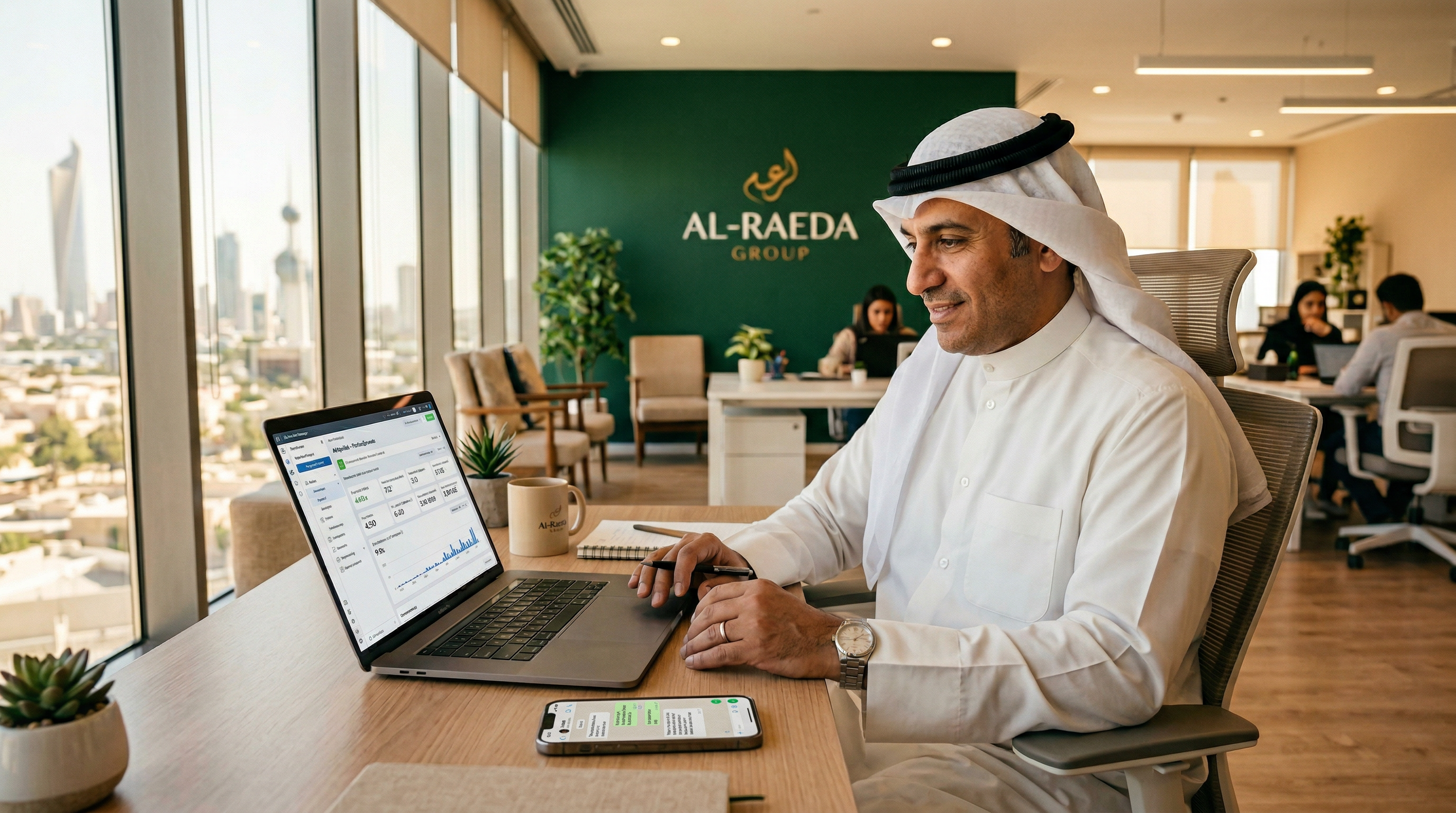
A Salmiya electronics retailer ran Meta Ads for six months with a pixel installed. Average ROAS: 2.1x. When KIRA audited the account, the pixel was firing PageView only. Zero conversation events. Zero purchase events tied to WhatsApp threads. The campaign was optimizing for people who visited a page — not people who bought something after messaging. Two weeks after correctly mapping click-to-WhatsApp events and enabling the Conversions API, ROAS moved to 8.4x on the same budget. The pixel was always there. It just wasn't doing anything useful.
What Meta Pixel Actually Is (vs. What Kuwait Businesses Think It Is)
Most business owners in Kuwait think the Meta Pixel is an analytics tool. It isn't. It's a signal machine. It collects behavioral data from your website or landing page, sends that data to Meta's servers, and trains Meta's algorithm to find more people who behave like your best customers.
The misconception that kills campaigns: businesses treat pixel installation as a one-time checkbox. Install it, forget it. But a pixel with no custom events configured is like hiring a salesperson and telling them to stand in the corner silently. The installation alone does nothing for performance.
When you run click-to-WhatsApp ads — which is now the dominant ad format across Kuwait retail, F&B, and healthcare — the pixel equation changes completely. Your conversion doesn't happen on a website. It happens inside a WhatsApp thread. That gap between the ad click and the sale is where most GCC campaigns leak their budget.
| What Businesses Think Pixel Does | What Pixel Actually Does | Kuwait WhatsApp Reality |
|---|---|---|
| Counts website visitors | Sends behavioral signals to Meta's algorithm | Most KW conversions happen off-site in WhatsApp — pixel misses them without CAPI |
| Runs retargeting ads | Builds lookalike audiences from high-value users | Strong lookalikes require 100+ matched conversion events — most KW accounts never reach that threshold |
| Tracks ad performance | Feeds purchase data back to optimize bidding | Without WhatsApp conversion events, Meta optimizes for clicks — not buyers |
| Works automatically after install | Requires event mapping + signal architecture | In GCC, browser restrictions and iOS 14+ blocking mean Conversions API is non-negotiable |
After running 35+ WhatsApp AI deployments across Kuwait and GCC, the pattern is consistent: brands that treat pixel setup as a technical task rather than a strategic one spend twice as much per lead as brands that build the signal architecture correctly from day one.
How Meta Pixel Setup Works With WhatsApp Campaigns
There are four components to a functioning pixel-plus-WhatsApp setup in Kuwait. Each one matters. Skipping any of them creates a gap in your signal chain, and gaps mean your campaign optimizes for the wrong behavior.
| Component | What It Does | Kuwait Example |
|---|---|---|
| Base Pixel Code | Loads on every page, identifies the browser session, creates the user fingerprint Meta uses for matching | A Mishref F&B chain embeds this on their menu landing page — fires on every visit |
| Custom Event Mapping | Fires specific signals (Lead, InitiateCheckout, Purchase) when meaningful actions happen | A Jabriya skincare clinic fires a "Lead" event when a visitor taps the WhatsApp button — confirms intent, not just pageview |
| Conversions API (CAPI) | Sends server-side signals directly to Meta — bypasses browser blocking, iOS 14+ restrictions, and VPN interference common in Kuwait | A Salmiya auto dealership uses CAPI to send purchase confirmation from their CRM after the WhatsApp close — closes the attribution loop |
| WhatsApp Conversation Event Matching | Connects the WhatsApp thread back to the original ad click using Meta's click ID (fbclid) — attributes the sale to the correct campaign | Without this, a Rumaithiya real estate agency's WhatsApp closings appeared as zero-attribution direct traffic in their reports |
The Conversions API component is especially critical in Kuwait and broader GCC markets. Safari's Intelligent Tracking Prevention, widespread VPN use, and Meta's own browser limitations mean browser-only pixel data is typically 30–45% incomplete, based on signal quality scores KIRA sees across managed accounts. CAPI fills that gap by sending the signal from your server, not the user's browser.
For brands using WhatsApp Business API through a Meta Solution Provider, CAPI integration is significantly cleaner because the API infrastructure already has server-side access. Brands running click-to-WhatsApp without an API backend face a harder integration path.
Why This Matters Specifically for Kuwait and GCC Businesses
Kuwait buyers behave differently from markets Meta's default optimization was built around. Purchasing decisions here happen inside conversations. A Kuwaiti consumer sees an ad for a dress, taps the WhatsApp button, asks about sizes and colors in Gulf Arabic, negotiates a delivery slot, and pays via an AI-handled conversation or a Tap Payments link sent inside the chat. The entire purchase cycle is off-website.
Meta's default optimization objective — traffic or link clicks — rewards the algorithm for sending people who click. Not people who buy. In a WhatsApp-first market like Kuwait, that's a structural mismatch between how the platform is configured and how customers actually convert.
Three specific behaviors make GCC pixel setup different from Western market setups:
- Snap-to-WhatsApp journeys: A significant portion of Kuwait purchase intent starts on Snapchat and completes on WhatsApp. Cross-platform attribution requires deliberate UTM architecture plus CAPI — not just pixel.
- Gulf Arabic negotiation: Buyers message in Arabic, sometimes English, sometimes both. The conversation-to-close gap can be 2–48 hours. Attribution windows must account for this — Meta's default 1-day click window misses many Gulf conversions.
- Cash and Tap Payments offline closes: Many Kuwait transactions are confirmed in WhatsApp but paid via KNET or cash on delivery. Without a purchase event fired at point of confirmation, the sale is invisible to the pixel.
For restaurant and F&B brands specifically, the click-to-WhatsApp ordering flow has become the dominant conversion path in Kuwait. Brands that get the pixel-to-WhatsApp signal loop right consistently outperform those running the same creative without proper event architecture.
For clinics and healthcare providers, the dynamic is appointment booking. A healthcare brand in GCC that fires a "Schedule" custom event when a patient confirms a time via WhatsApp gives Meta the signal it needs to find more appointment-likely audiences — instead of optimizing for browser sessions that bounced.
Two Real GCC Examples: One That Worked, One That Didn't
The Hawalli Clinic That Cut Cost Per Appointment by 61%
A dermatology clinic in Hawalli had been running click-to-WhatsApp ads for a year. Their cost per appointment booking averaged KD 8.40. Their pixel was installed and firing ViewContent on their services page. That was it.
KIRA rebuilt their event architecture over two weeks. A "Lead" event fired when a visitor tapped the WhatsApp button. A custom "Schedule" event fired — via CAPI from their booking confirmation system — when a patient confirmed an appointment time inside the WhatsApp thread. Their attribution window extended to 7-day click, 1-day view to account for Gulf Arabic conversation pace.
Within 45 days, Meta's algorithm had enough purchase-intent signal to restructure its audience targeting. Cost per confirmed appointment dropped to KD 3.27. Same creative. Same budget. Different signal architecture. You can review how signal-matched campaigns perform across verticals in KIRA's case study archive.
The Rumaithiya Real Estate Agency That Wasted Six Months of Data
A property agency in Rumaithiya ran a click-to-WhatsApp campaign promoting new Sabah Al Salem units. They had a pixel. They had an agency. They had a reasonable monthly ad budget. After six months, their Meta Ads Manager showed 847 link clicks and 0 purchases. Their sales team had closed 23 units through WhatsApp during that same period.
The disconnect: zero events were connected to WhatsApp conversions. Meta saw 23 units worth of demand and registered nothing. The algorithm spent six months optimizing for click-through rates on a real estate audience, with no idea which click-throughs eventually led to property viewings, deposits, or closings. Six months of conversion data, gone. When KIRA took over the account and implemented CAPI with a custom Purchase event triggered at deposit confirmation, the cost per qualified lead dropped 38% in the first campaign cycle. The data was always being generated — it just wasn't being captured.
For real estate specifically, the property sector in GCC has a uniquely long WhatsApp conversion window — often 7–21 days from first message to deposit. Default attribution windows miss most of it.
Should You Prioritize This? A Decision Framework
| Your Situation | Priority Level | Reason |
|---|---|---|
| Running click-to-WhatsApp ads and spending over KD 500/month | Critical — fix immediately | Every month without conversion events is a month of optimization data destroyed |
| Running traffic or awareness campaigns with no WhatsApp CTA | Medium — base pixel only needed | Standard retargeting setup is sufficient; CAPI adds minimal lift for non-conversion objectives |
| Using WhatsApp API with an integrated CRM | High — CAPI is straightforward | CRM already has purchase confirmation data — CAPI integration is a clean server-to-server push |
| Manually managing WhatsApp without API or CRM | Medium — partial solution possible | Can fire Lead events on button tap; Purchase events require manual trigger or upgrade to API |
| E-commerce with full website checkout (no WhatsApp close) | Standard — existing guides apply | Website-native checkout means browser pixel plus CAPI covers most of the signal gap |
| Running Snapchat Kuwait ads alongside Meta | High — UTM architecture required | Without UTM source tagging in WhatsApp links, Snap-to-WhatsApp conversions are unattributable |
| Under KD 200/month ad spend | Low — build budget first | Algorithm needs 50+ conversion events per week to exit learning phase; low budgets won't generate enough signal regardless of pixel quality |
The SMB version of this setup — for brands not yet running full API infrastructure — is covered in the Lojain Lite bundle, which includes pre-built WhatsApp event triggers without requiring a full CRM integration. It's the practical entry point for Kuwait businesses that want functional signal architecture without enterprise-level setup costs.
For brands ready to run at scale, the comparison between providers matters. The difference between a generic integration and a Meta-verified Solution Provider setup is measurable in signal quality scores — see how providers compare on this dimension here. As KIRA is a Meta-verified Solution Provider, our CAPI implementations carry higher trust scores than third-party integrations, which affects match quality and ultimately, campaign performance.
Frequently Asked Questions
Do I need the Meta Pixel if I'm only running WhatsApp ads in Kuwait?
Yes — but the standard pixel setup isn't enough. Click-to-WhatsApp ads still benefit from pixel signal when you fire events at meaningful points in the journey: button tap (Lead), message sent (InitiateCheckout), sale confirmed (Purchase). Without those events, Meta optimizes for ad clicks, not buyers. The pixel base code alone gives you retargeting pools; the custom events give you algorithmic optimization toward revenue.
What is the Conversions API and why does Kuwait need it specifically?
The Conversions API (CAPI) sends conversion data from your server directly to Meta, bypassing browser-based blocking. In Kuwait, high VPN usage, iOS 14+ privacy restrictions, and Meta's in-app browser limitations mean browser-only pixels typically capture 55–70% of actual conversions. CAPI closes that gap by sending a server-side signal when a sale or lead is confirmed — independent of what happens in the user's browser.
Can I track WhatsApp purchases if I don't have a website?
Yes. If you use WhatsApp Business API through a platform like Lojain AI, purchase confirmation events can be sent via CAPI directly from the conversation platform to Meta without a website involved. If you're on standard WhatsApp Business without API access, your options are limited to firing Lead events on button taps from a landing page, and manually triggering purchase events — which is operationally difficult at scale.
How long before the Meta Pixel has enough data to optimize properly in Kuwait?
Meta's algorithm requires approximately 50 conversion events per week, per ad set, to exit the learning phase. In Kuwait's market size, that's achievable for medium-to-large businesses but requires deliberate budget allocation. For businesses generating fewer than 50 WhatsApp purchases per week, consolidating ad sets and using broader events (Lead instead of Purchase) for optimization is the practical workaround while building toward volume.
Does my WhatsApp Business API provider affect pixel performance?
Directly, yes. Meta-verified Solution Providers have server-side API access that makes CAPI integration cleaner and produces higher event match quality scores. Lower match quality means Meta can't reliably connect your conversion events to the users who generated them — which degrades lookalike audience quality and bidding optimization. KIRA operates as a Meta-verified Solution Provider, which is one reason signal quality across managed accounts consistently outperforms self-managed or third-party-managed setups.
Should I use the WhatsApp button event as a conversion or just a micro-event?
Depends on your conversion volume. If you're closing 50+ WhatsApp sales per week, optimize for Purchase and use button tap as a micro-event for audience building only. If you're closing fewer than 20 sales per week, optimize for Lead (button tap) to give Meta enough signal volume to function, and track Purchase separately for your own reporting. Never optimize for both simultaneously in the same campaign — it confuses Meta's bidding logic.
What attribution window should Kuwait businesses use for WhatsApp campaigns?
7-day click, 1-day view is the recommended starting point for most Kuwait businesses. Gulf Arabic purchasing conversations often span 24–72 hours — sometimes longer for high-ticket items like real estate or medical procedures. The default 1-day click window misses a meaningful percentage of WhatsApp conversions in GCC markets. For real estate and healthcare, testing a 28-day click window is worth running for at least one campaign cycle to see how much conversion volume you've been missing in attribution.
Talk to Us on WhatsAppReady to Scale Your Marketing with AI?
KIRA delivers AI-powered marketing systems, WhatsApp automation, and media buying strategies for businesses worldwide.
Book a Strategy Call More ArticlesGet KIRA in your AI answers
Add KIRA as a Google Preferred Source so our articles show a "Preferred" badge in your AI Overviews & AI Mode results. Log in to Google, then tick the box next to kiraco.org.
Add KIRA as a Preferred Source